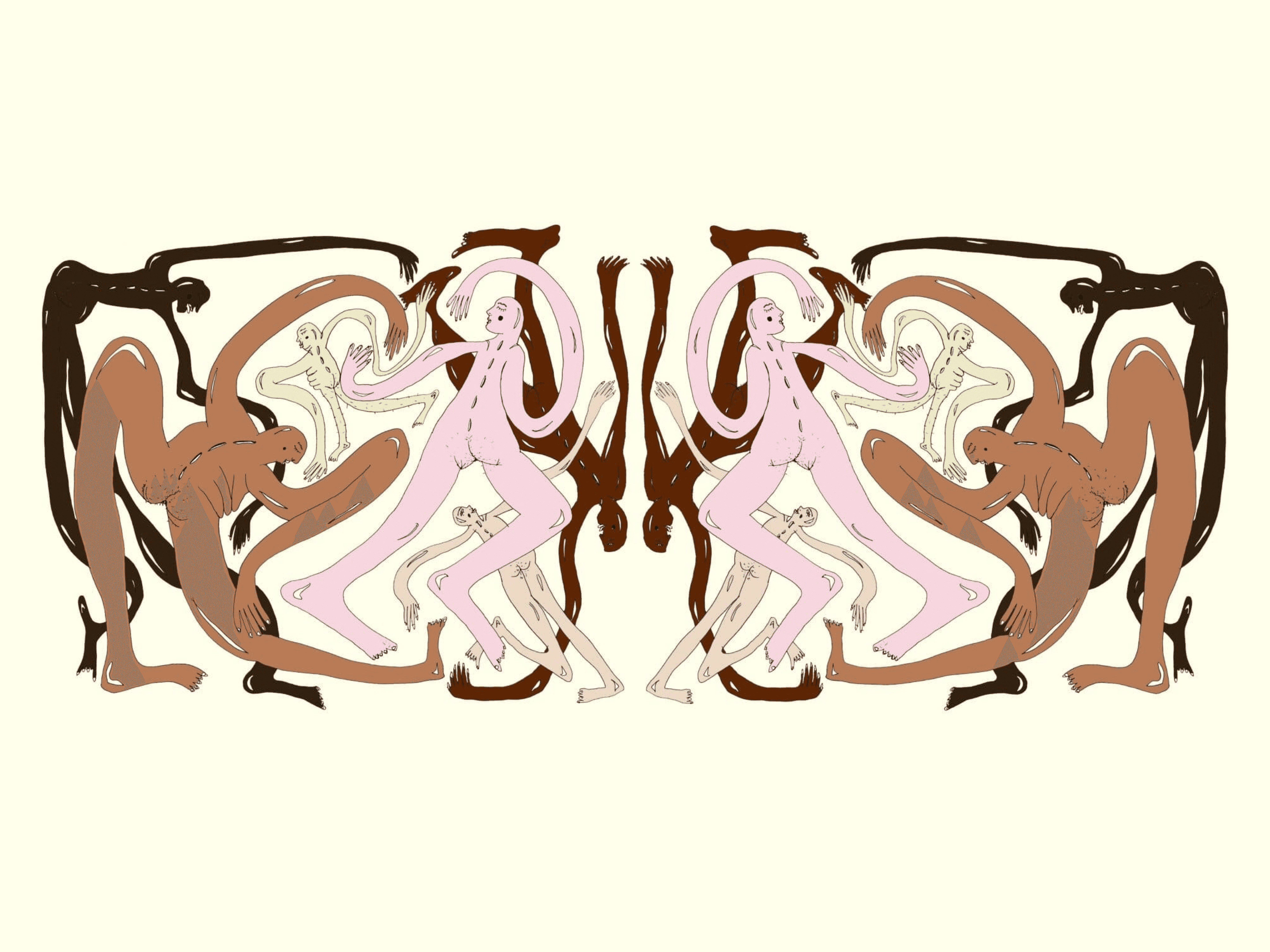
There has been a cultural shift in how we understand gender. A great many people now view gender as a spectrum rather than a binary. Increasingly, we are expanding our perceptions, acknowledging that gender is about how we feel internally and not something we can determine based on our body parts or how we present. While there is progress, we are still perceived to be a certain gender at birth based on how our biological characteristics are interpreted before we have had a chance to understand our own identity. When it comes to biological sex, conversations are often stunted by a level of unquestioning acceptance of a binary that is packed with implications on how we are perceived.
Biological sex is not as simple as it is made out to be: it is a spectrum, not a binary. Biological sex is determined by genitalia, chromosomes, gonads, internal sex organs, hormone production, hormone response and secondary sex characteristics (like breast development or body hair). There is so much variation within these seven categories. Some people fall clearly into how the medical field categorises 'men' and 'women' and others do not. People who do not fit in either of these boxes are referred to as intersex. Approximately 1.7% of the population are born with intersex traits, the same as the percentage of people born with ginger hair.
Nature prefers diversity and delivers a spectrum of possibilities that makes binary sex a myth so hard to sustain that in modern times, surgical interventions have been developed to 'correct' the less differentiated genitals in many Western(ised) societies. — Creighton and Liao, 2019
So why do we barely talk or know about this natural variation? Because it undermines the concept that sex is a binary and therefore that we should live in binary ways and follow paths set out by this controlling dichotomy. Ironically, intersex people are often forced into medically unnecessary surgeries at young ages so that they fit into a binary sex, whereas trans people have to jump through life-threatening hoops in order to access gender-affirming care.
Want to find out more? Emily Quinn's TED Talk The Way We Think About Biological Sex is Wrong is incredibly insightful and informative on the subject of intersex people and biological sex.
Further Reading
Emily Quinn, 2018, The Way We Think About Biological Sex is Wrong (Ted Talk).
Sarah M. Creighton & Lih-Mei Liao, 2019, Chapter 1 of: Female Genital Cosmetic Surgery: Solution to What Problem?
