Grab a cuppa, get comfy and have a nosy around :)

AQDA

A research-led archive built for accessible discovery and time-coded storytelling.

The Assembling Queer Displacement Archive (AQDA) is an oral history archive of LGBTIQ+ forced displacement, developed as part of Renee Dixson’s PhD research at the Australian National University. We partnered with AQDA to refresh the archive’s brand and website so the work could be accessed more easily—by researchers, community members, and anyone looking to learn—without flattening the seriousness of the stories being held.

Project Team

Branding and UI Design: Alaïs de Saint Louvent

UX/UI Design: Katie Gee

Development: Sofiia Bondarenko

The Challenge

AQDA sits at a demanding intersection: an archive needs structure and speed, but the content asks for care. The site had to support deep discovery across long-form, time-coded transcripts, while remaining accessible for disabled users and for people reading in a second language.

A major complexity was how to handle transcript translation and present multilingual content in a way that stays readable and navigable, especially on mobile. The experience needed to reduce cognitive load, help people find what they are looking for, and avoid overwhelming users as they moved through the archive.

What We Did

We redesigned AQDA’s UX around the practical realities of research-led archival browsing: clear pathways, strong information hierarchy, and metadata-led discovery.

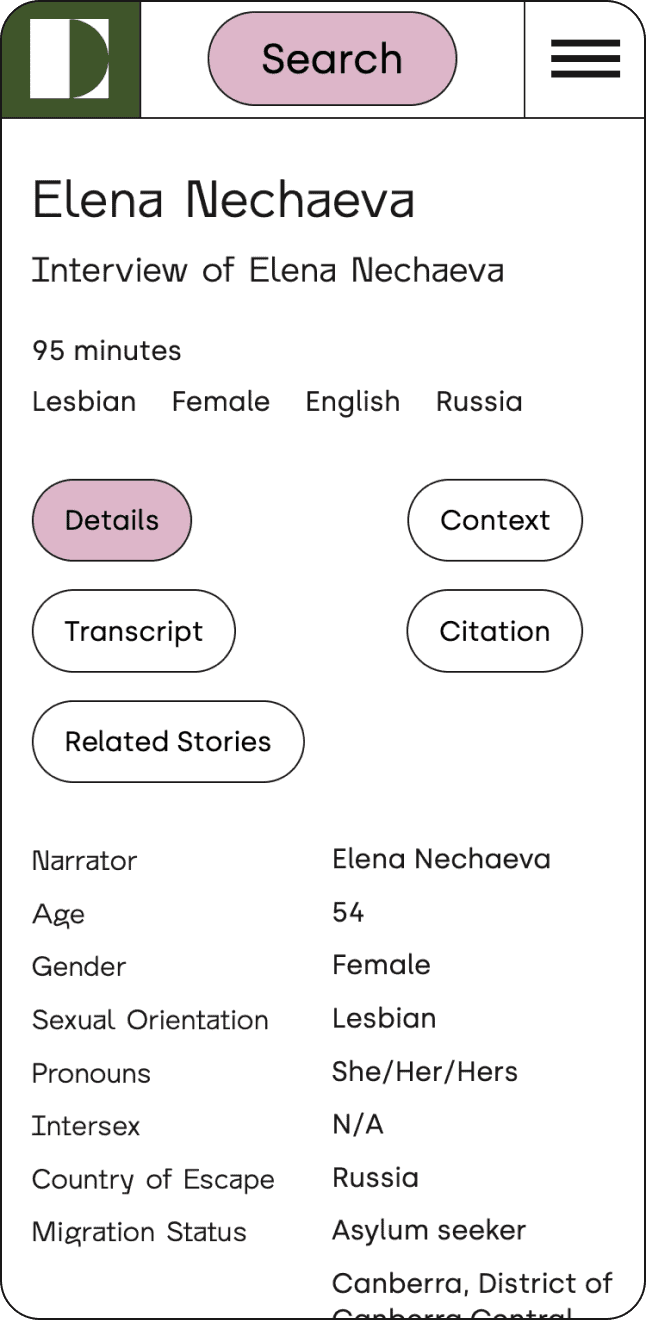
We built the experience around a solo, filterable navigation system that works across screen sizes, with a deliberately more linear journey on mobile inspired by digital archival design patterns.

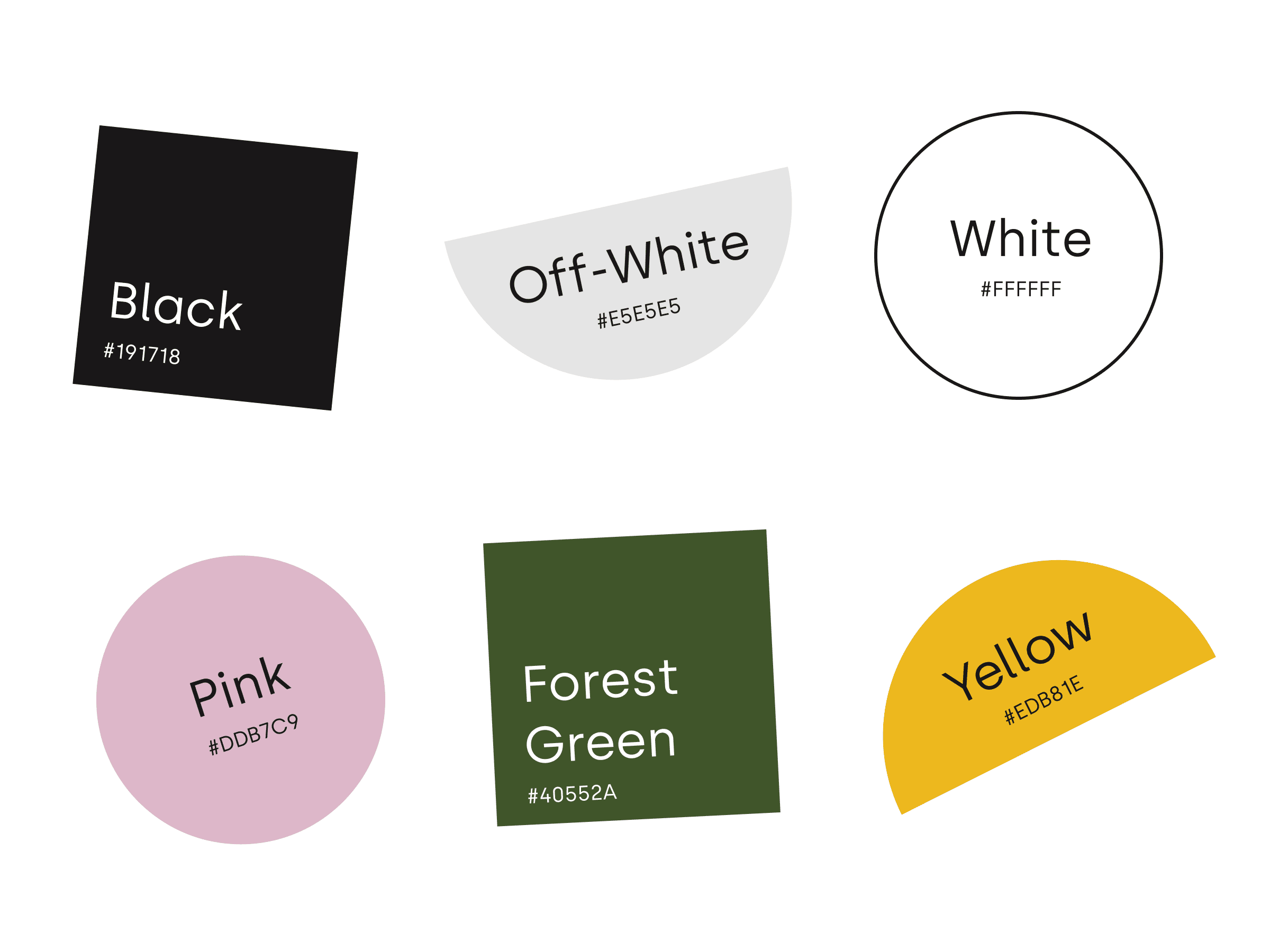
Because the archive is used by a wide range of audiences, accessibility was not an add-on—it shaped the visual and interaction decisions. We worked carefully with colour to avoid overwhelming or triggering combinations, and prioritised high-contrast, readable pairings that support clarity for people with visual impairments or fatigue, as well as for those reading in a second language.

We also improved how transcripts can be explored, incorporating subtitles, timestamps, and accessible text patterns so time-coded oral histories are easier to follow and return to.

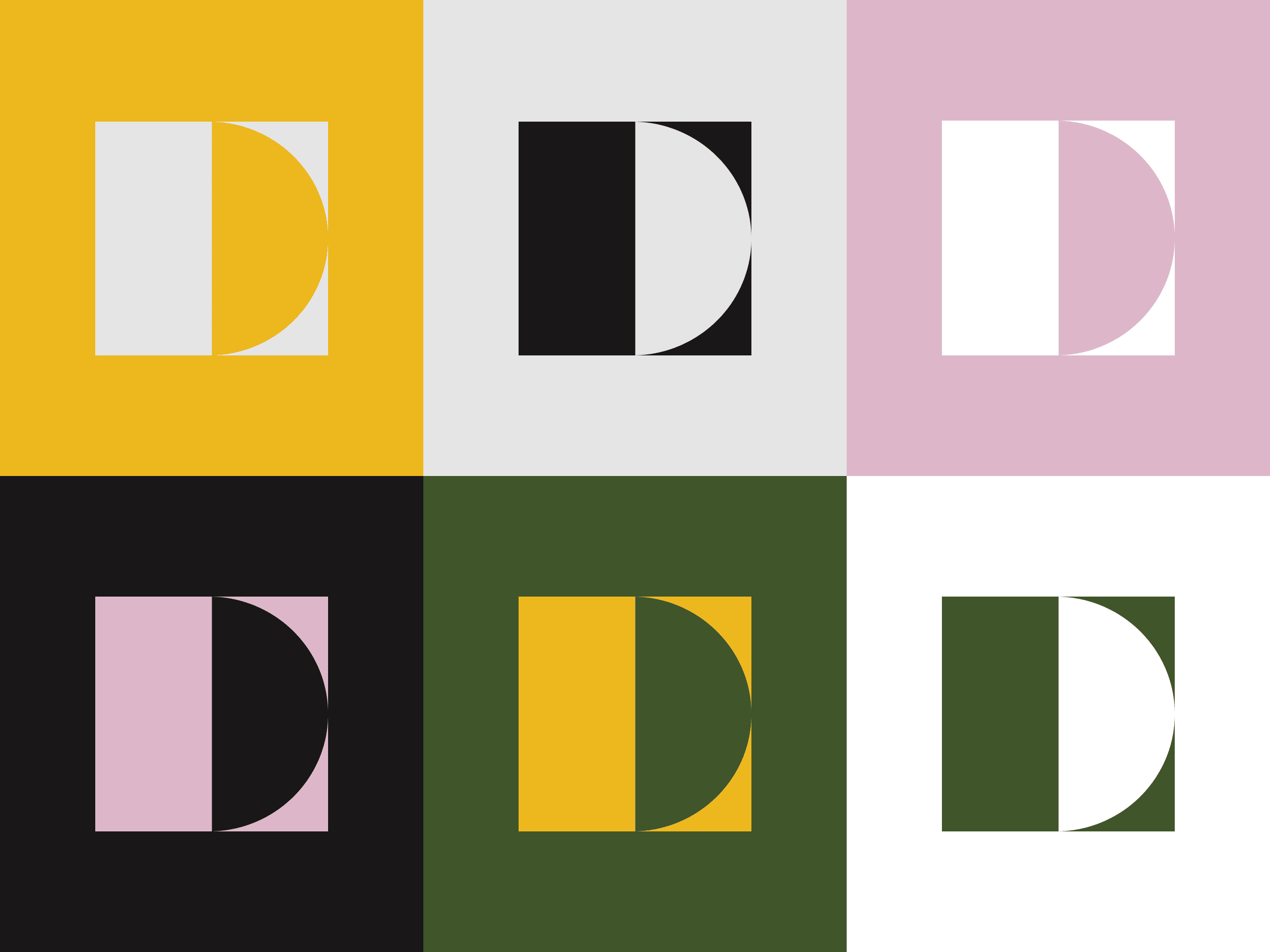
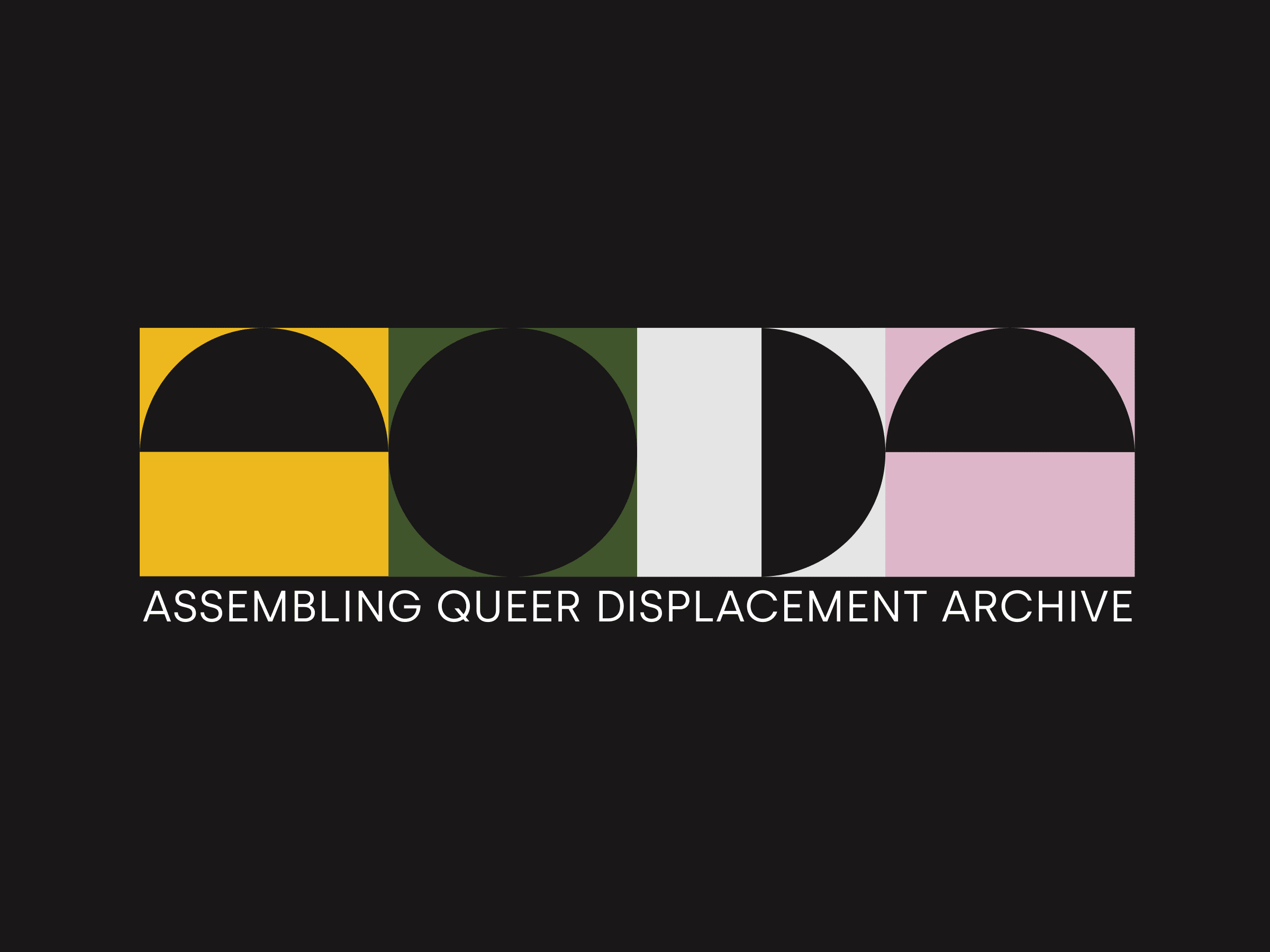
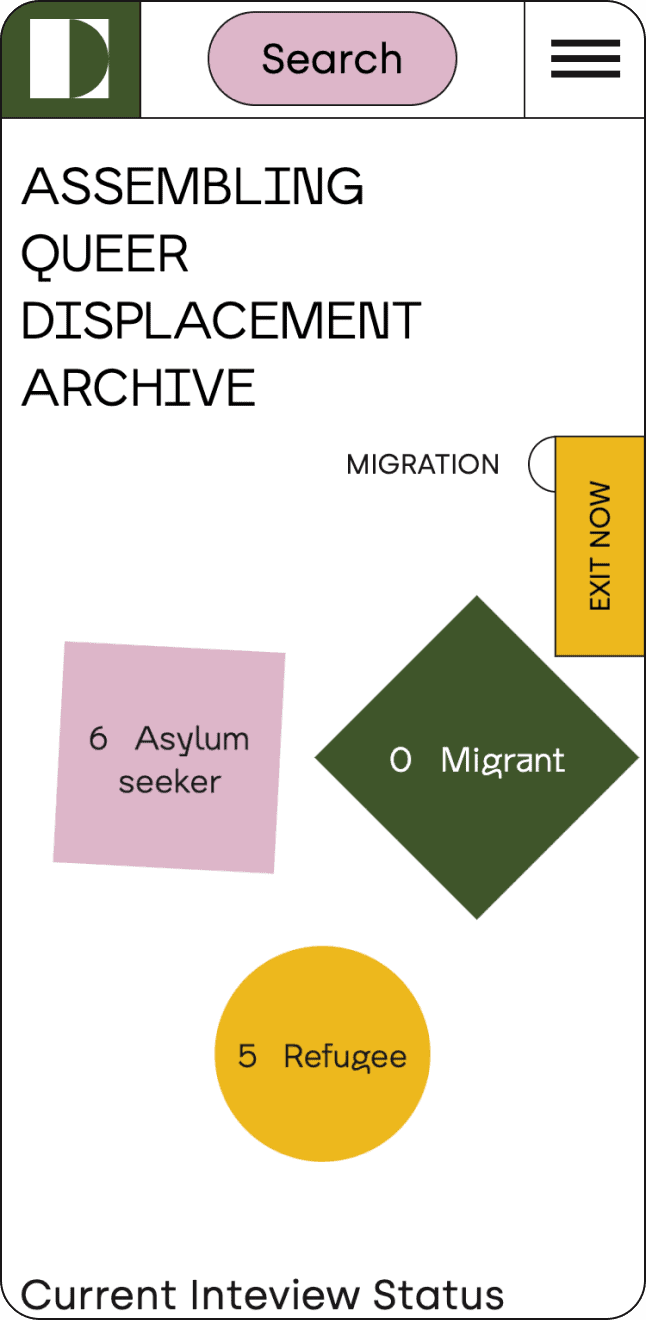
Alongside the website work, we refreshed the brand identity with reference to historical and archival materials. We introduced a playful shape language as a visual metaphor for a displaced community finding its place—creating a system that feels human and hopeful, while staying respectful of the content.

Finally, we produced a social media and branding guide so AQDA can communicate consistently as the PhD research and archive continue to grow.

Impact

AQDA’s updated website supports a more usable, accessible archival experience—helping people browse and search without unnecessary friction, and making time-coded transcripts easier to navigate across devices.

For a PhD-led project, that usability matters: it strengthens how the research can be explored, referenced, and shared, while keeping the archive welcoming to community audiences beyond academia.

By grounding the design in accessibility and care, the platform better supports a wider range of readers and research contexts—making it easier to discover stories, understand them in context, and engage at a pace that feels safe.

Logo featuring AQDA in yellow, green, black, white and pink geometric shapes above ASSEMBLING QUEER DISPLACEMENT ARCHIVE on black background.
Pink square with large dark green semicircle on right, black AQDA letters at bottom left. Background is solid dark green.
Abstract black and white geometric shapes, AQDA in white text on one, with Assembling Queer Displacement Archive below the largest shape.
A grid of six squares, each featuring a stylised D design. The colours used are yellow, black, pink, and dark green, set against assorted background shades. Each D shape is divided into contrasting halves within its square.
Three font samples—Archiv Grotesk, Silka Regular, and Silka Italic—on a mauve background with A–Z, a–z, and 0–9 shown below.
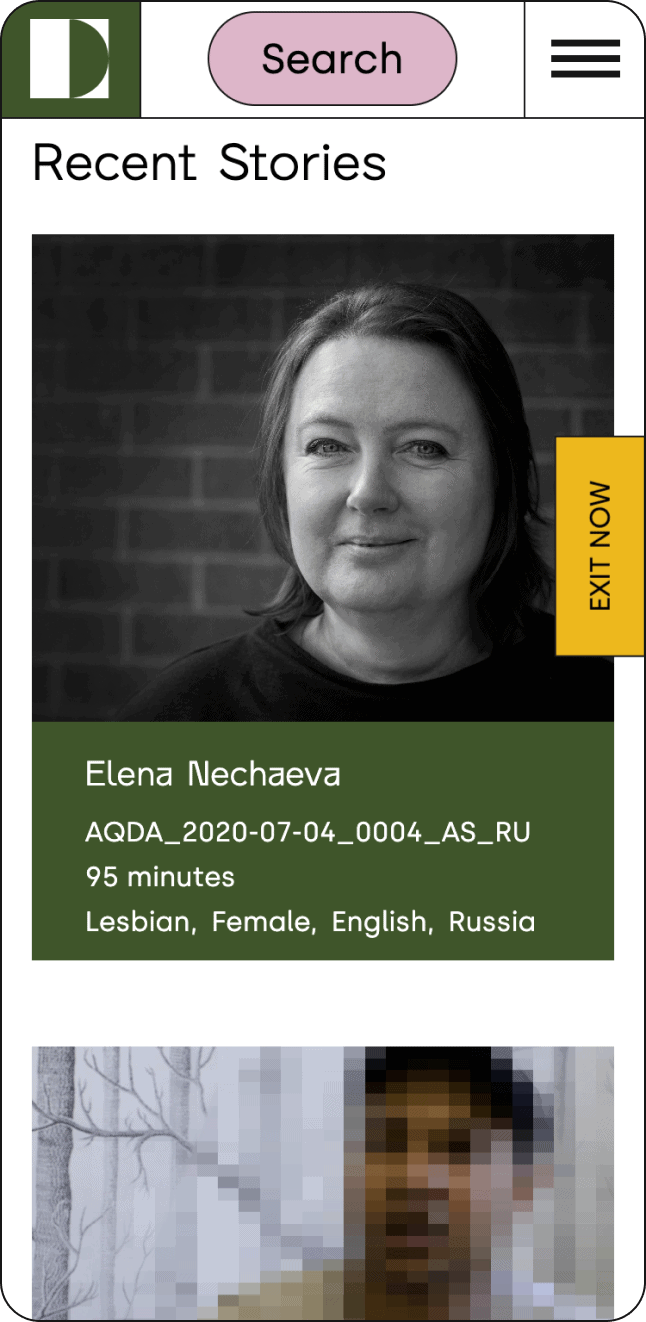
Elena Nechaeva, smiling with light brown hair, gestures on a sofa in an interview. “ASSEMBLING QUEER DISPLACEMENT ARCHIVE” header.
Website interface for ASSEMBLING QUEER DISPLACEMENT ARCHIVE with Details, Context, Transcript tabs and a transcript search on pink.
Webpage with yellow header titled Assembling Queer Displacement Archive, menu, search bar, video preview, and pink background.
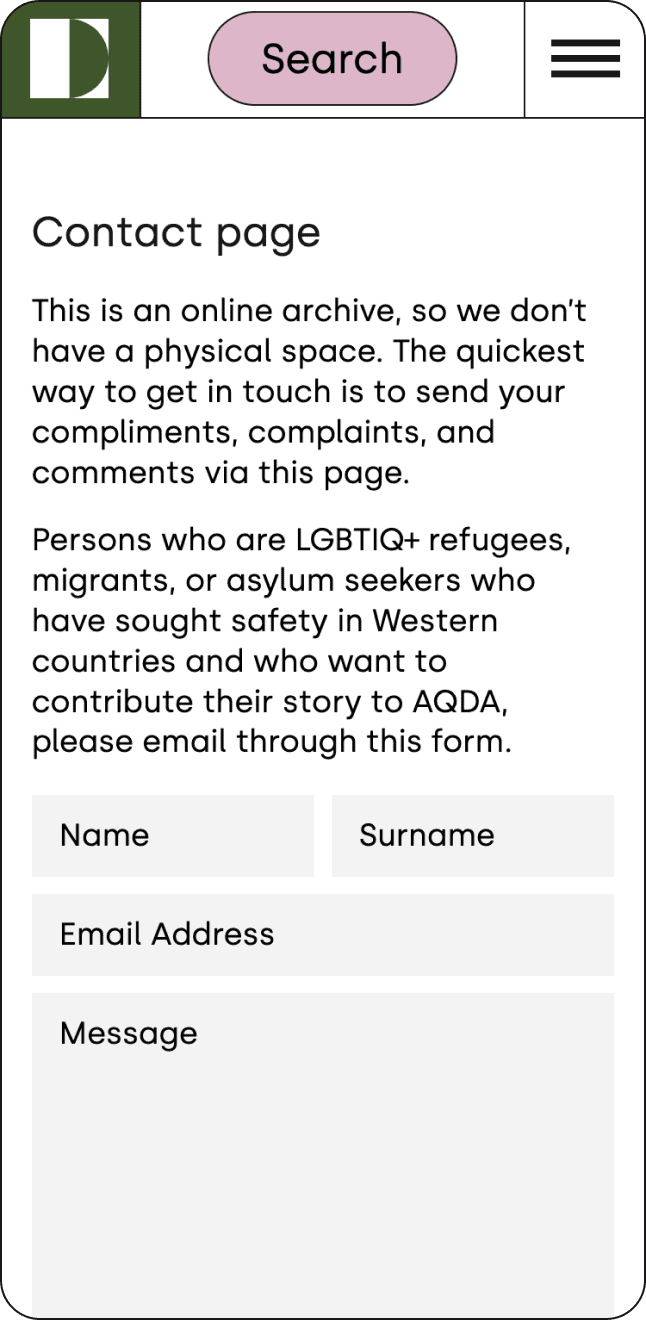
Assembling Queer Displacement Archive web page with contact form left, filters right for gender, orientation, language; dark green background.
Two mobile screens display a story filter menu; one with options unselected, the other highlighting Transmasculine, Transgender man, Persecuted filters, and location and language choices.
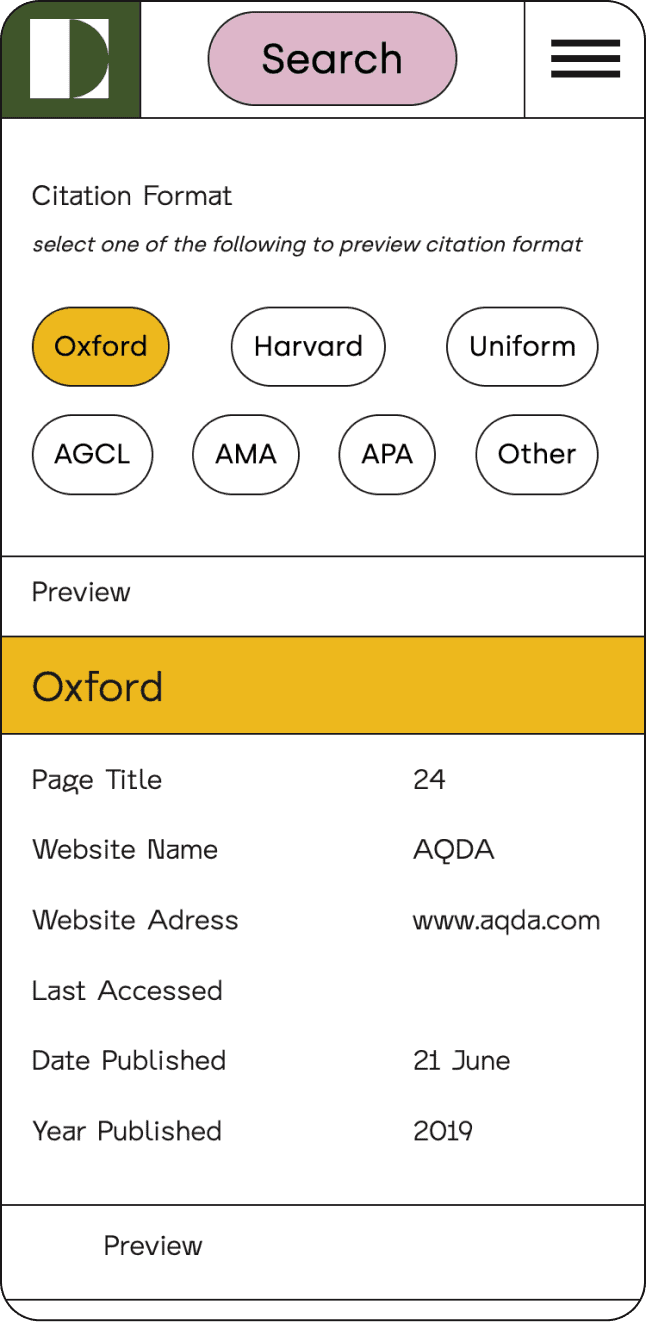
Website page shows “AGCL” citation options, copy or download buttons, and info like website name, URL, date accessed, and year.
Two mobile phones on a yellow background display an interview summary and citation format options, with Oxford style information shown below.
Three Instagram posts: first, an elderly woman grinning warmly; second, bold text reading Stories of Ukrainian refugees set against a vibrant yellow background; third, a playful geometric design with circles and squares in black, yellow, and pink.