Grab a cuppa, get comfy and have a nosy around :)

Bodysymptoms

A participatory-designed health resource that meets people where they are.

Bodysymptoms is an online resource designed to demystify and support people living with functional symptoms such as IBS and fibromyalgia. Developed as part of Dr. Chloe Saunder’s PhD, the project brings together current research, healthcare insight, and lived experience. Drawing on a participatory discovery process, we created the brand identity and designed and developed the WordPress website.

Project Team

Branding: Zoe Tang

UX Design: Faith Ekanem

UI Design: Alaïs de Saint Louvent

Development: Nata Sheketa

The Challenge

People arrive at Bodysymptoms with very different needs, and often with limited energy. The platform had to support visitors who want to understand what is happening in their body, as well as people who are looking for practical support right now.

At the same time, the project needed to avoid a purely clinical feel. The resource had to be credible and research-backed, but also warm and human, reflecting lived experience and making the site feel safe to spend time on.

Finally, the site needed to be accessible and mobile-first, and it needed to work across multiple European languages so the resource could reach people beyond one context.

What We Did

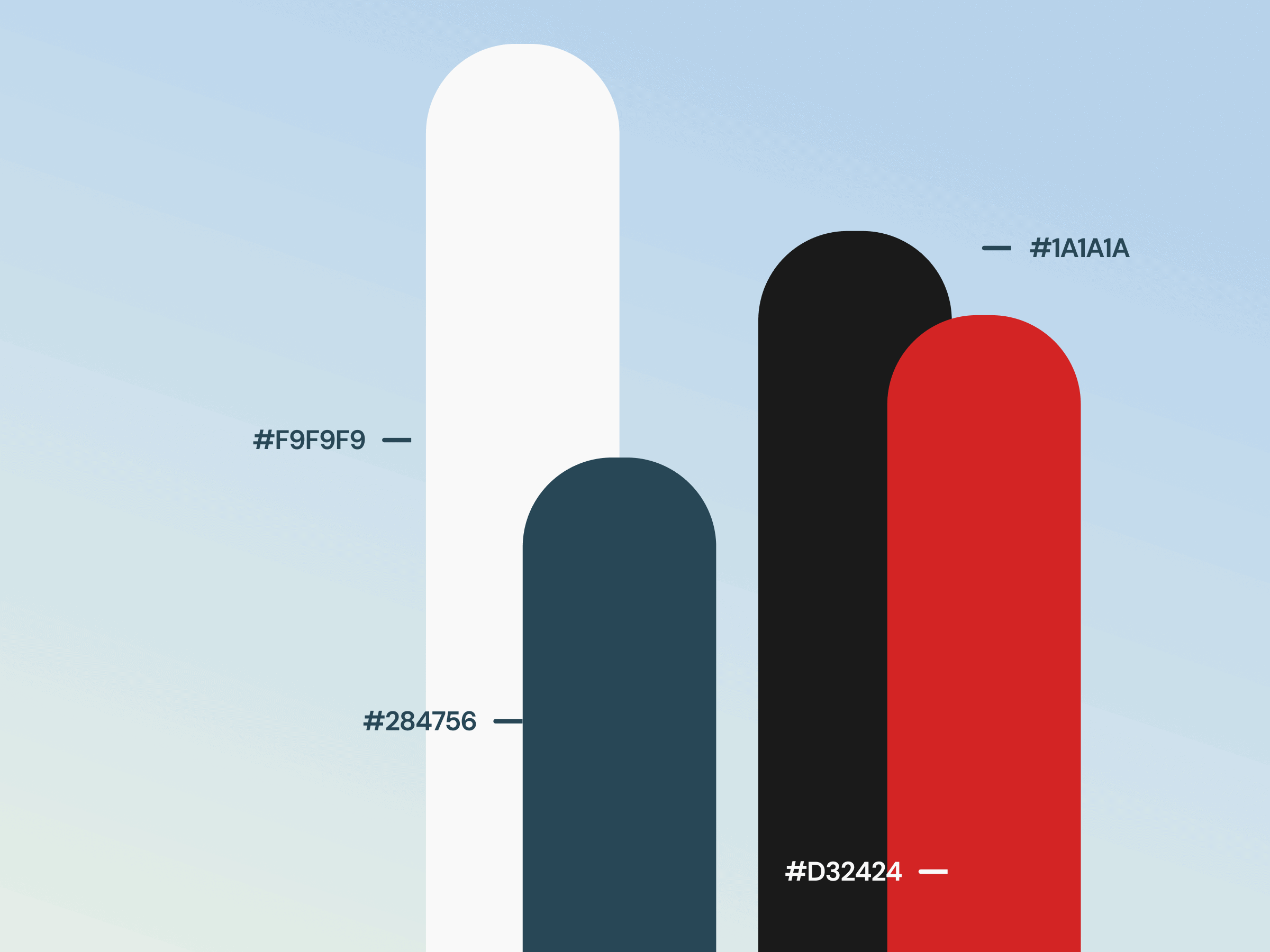
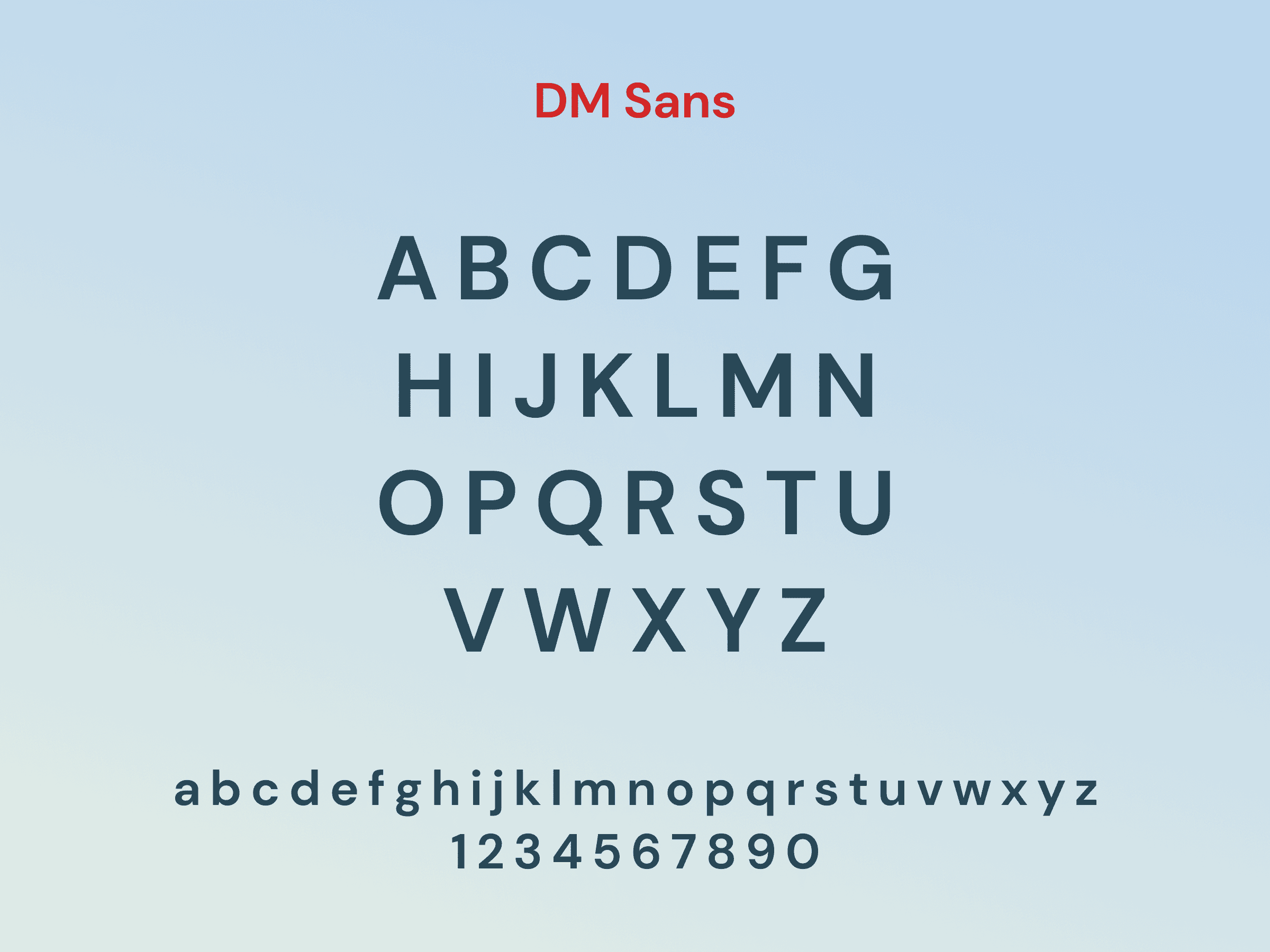
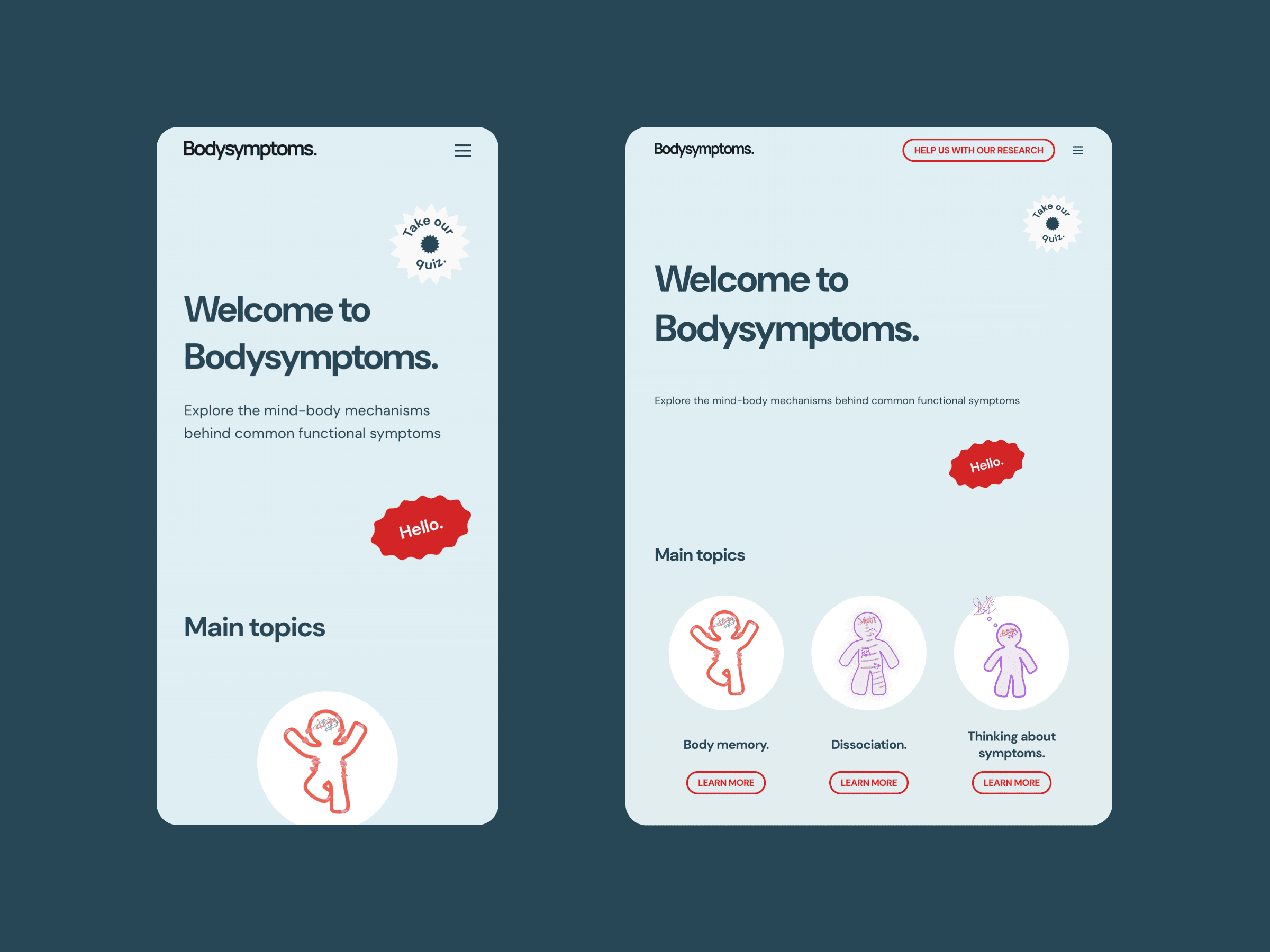
We developed the brand identity with accessibility as a core design constraint, reflected in the spacing, typography, and colour choices. The palette uses soft tertiary tones and calming greens, with bold coral accents to draw attention where needed. We also introduced playful sticker elements to add care and lightness, helping the resource feel supportive rather than purely medical.
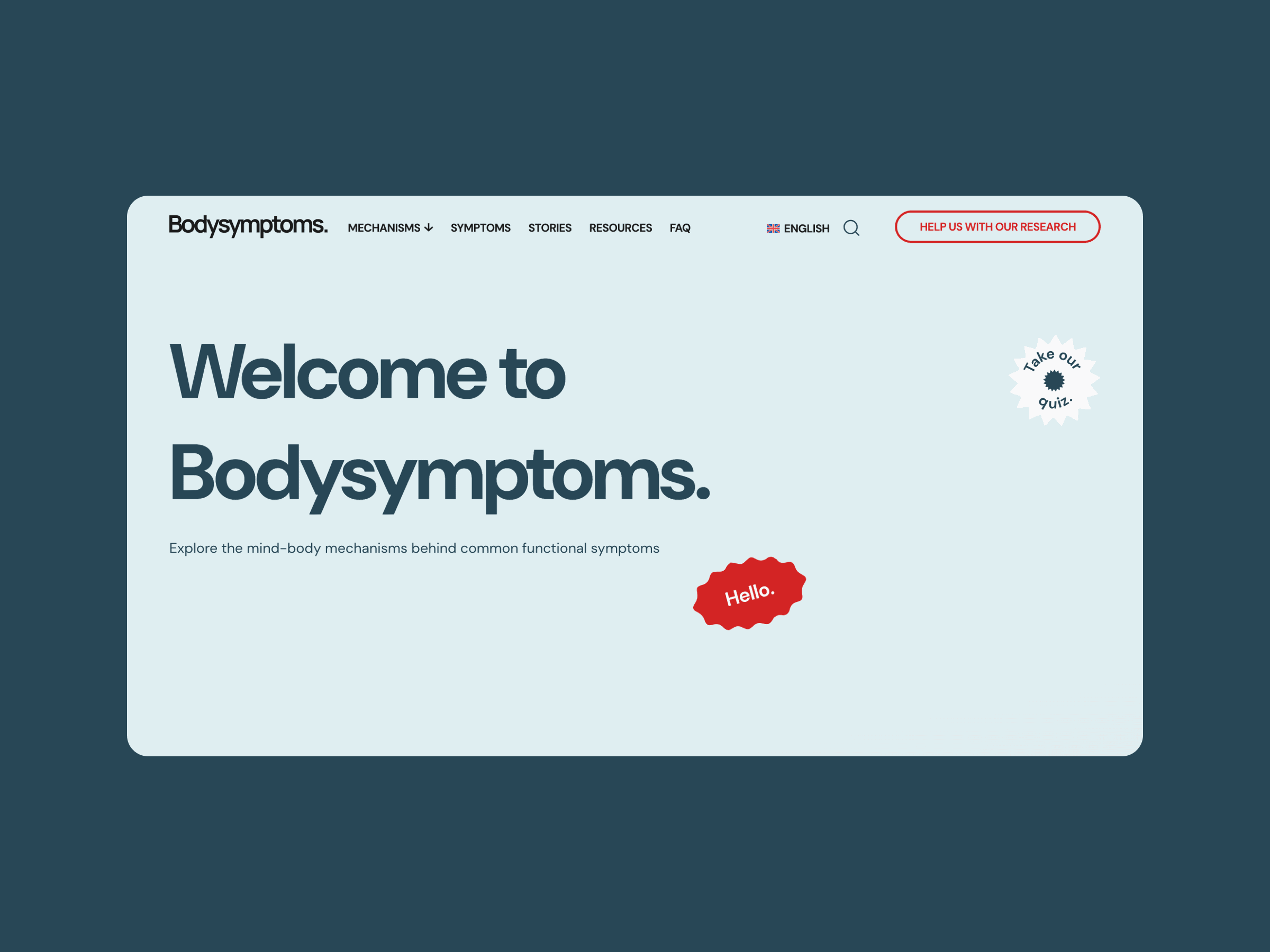
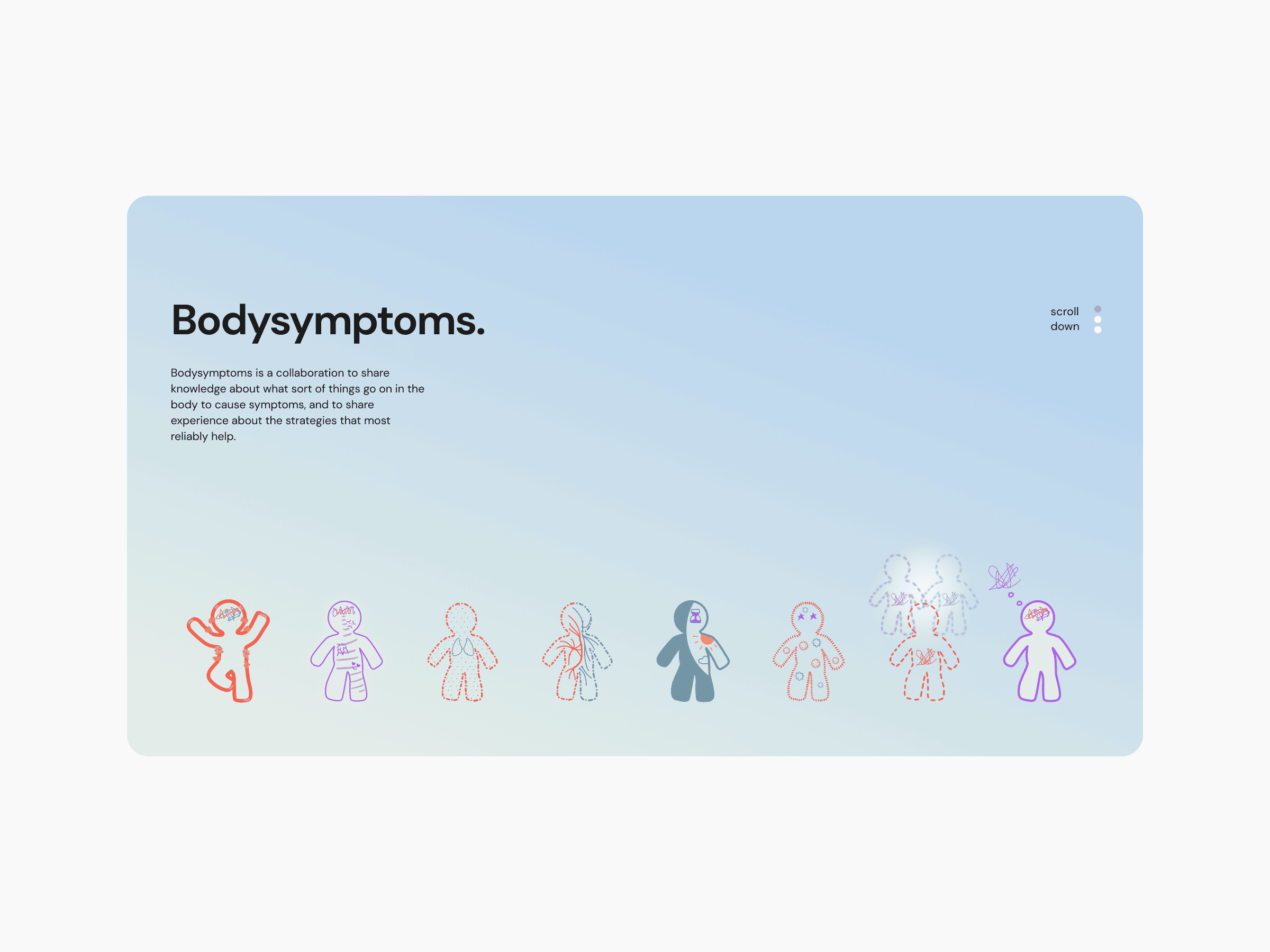
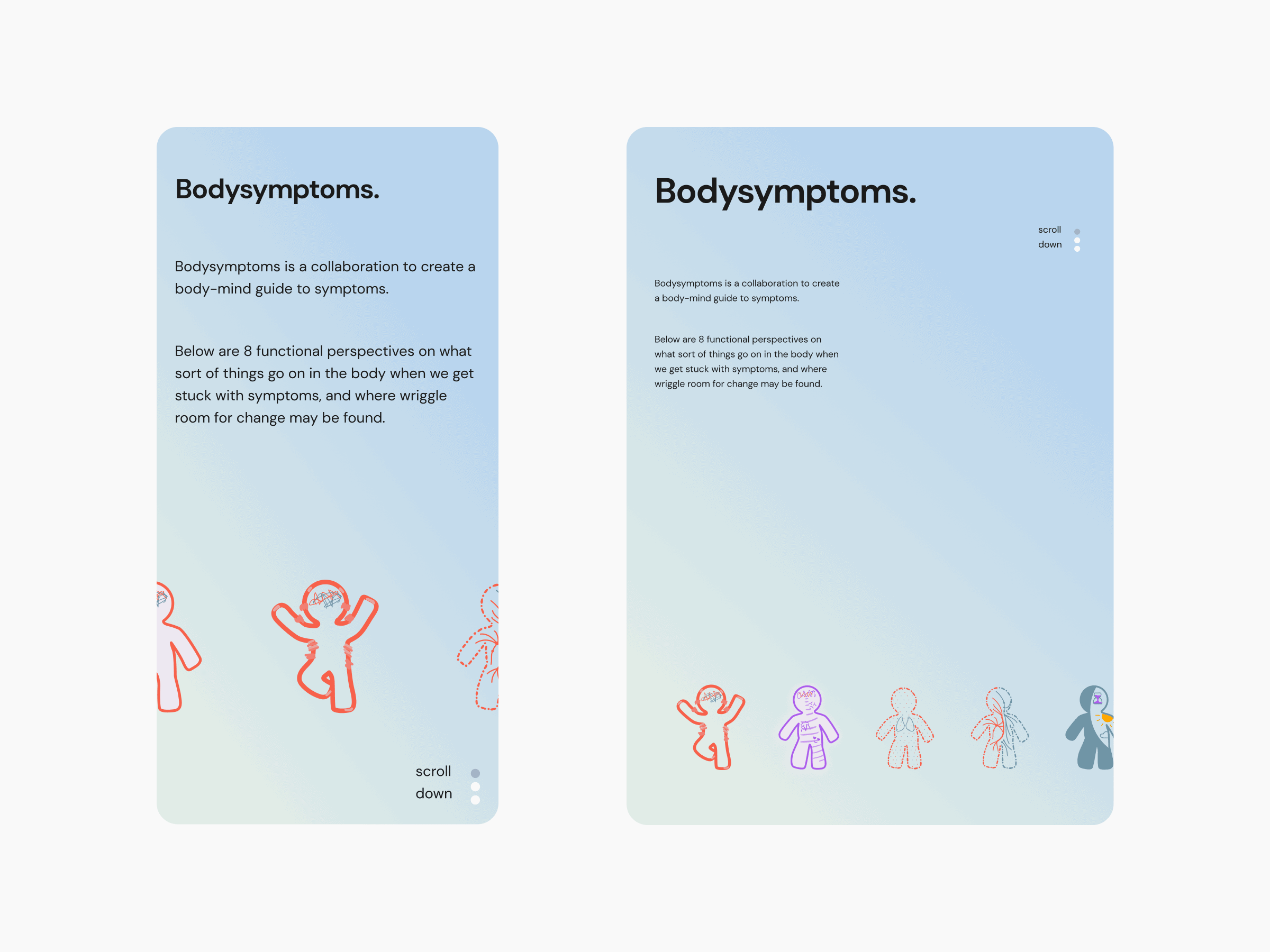
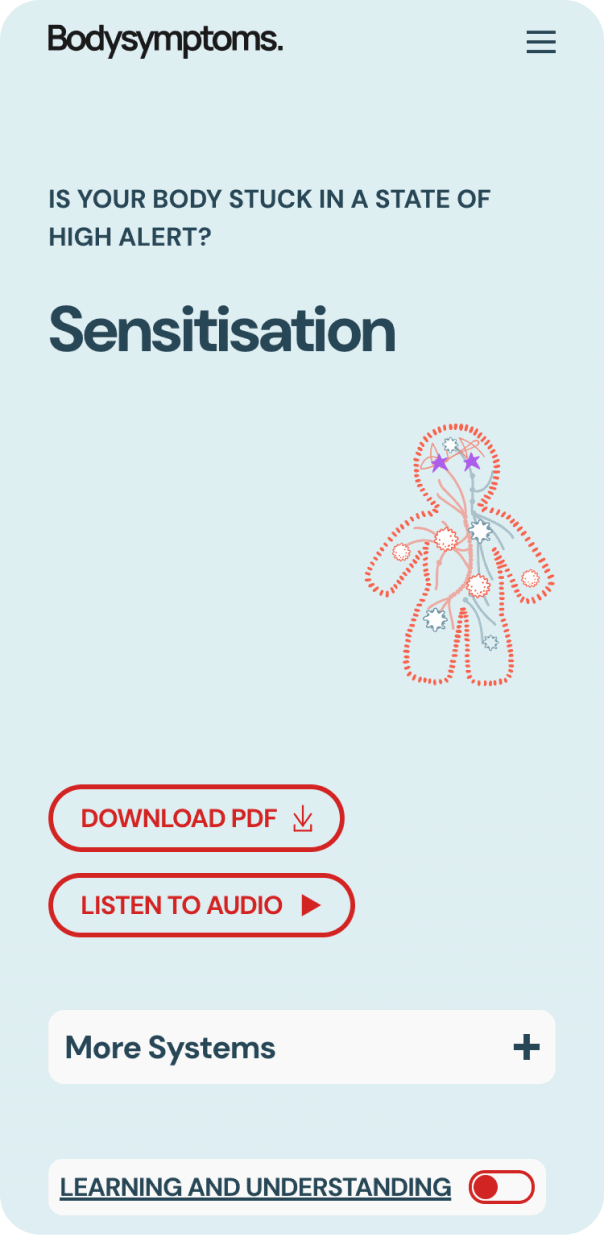
The landing page showcased early illustration iterations co-created with Chloe, then adapted for web. These illustrations went through a dedicated round of user testing to check they represented the intended phenomena in a way that felt clear and respectful.

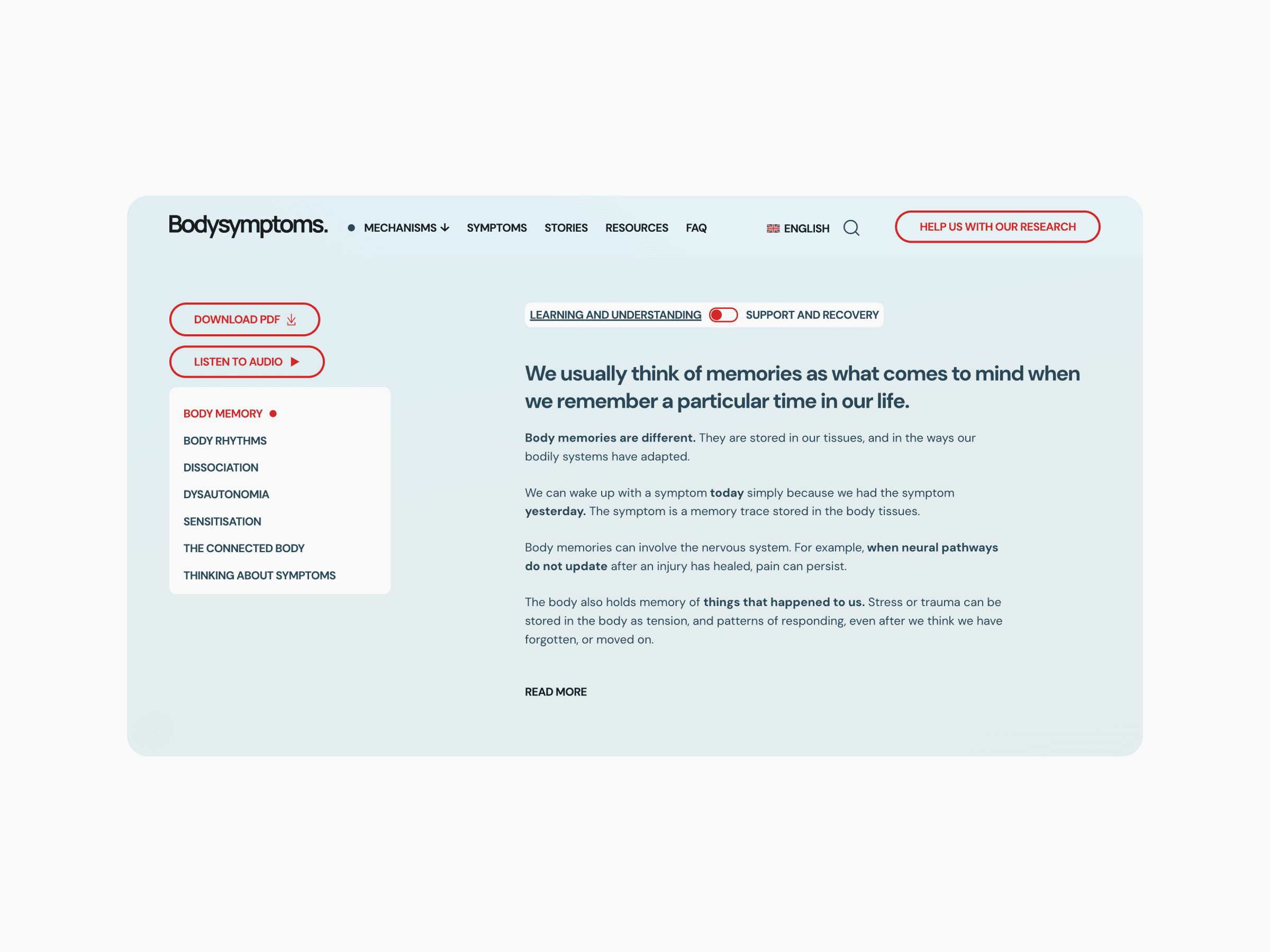
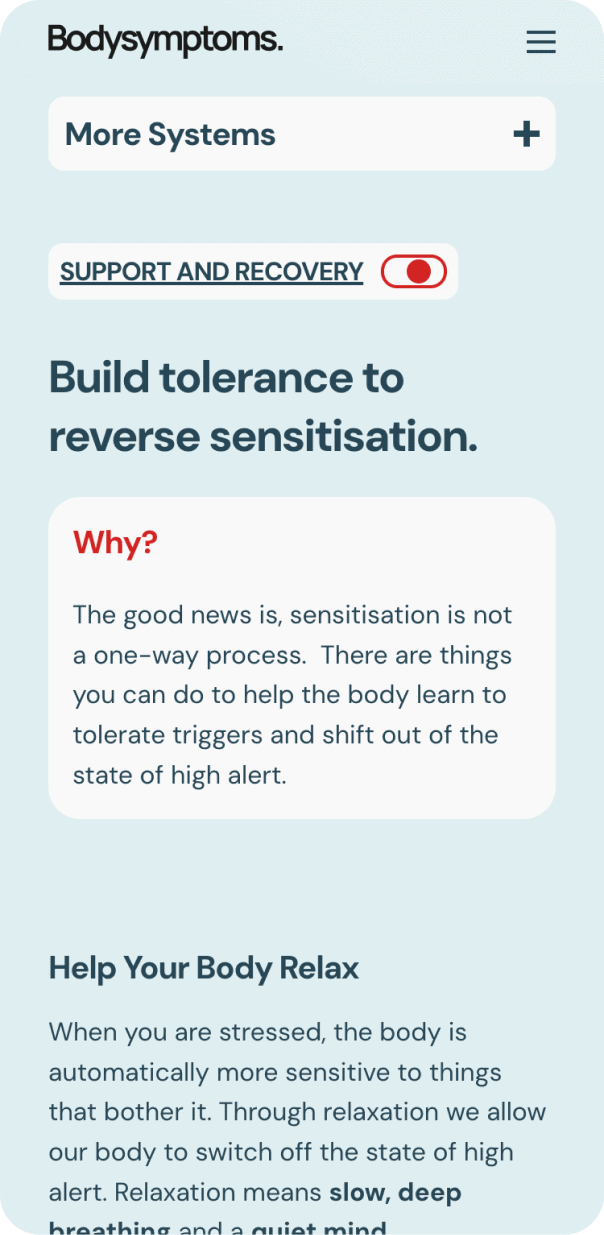
For the website experience, we designed with the reality of different symptom journeys in mind. Key interactions include the ability to toggle between “Learning mode” and “Support mode”, as well as a quiz-like sticker that helps people connect their symptoms to the Bodysymptoms framework.

To keep browsing calm and reduce environmental impact, we implemented lazy loading so elements come into view gently as people scroll. We also ensured the site is responsive and straightforward on mobile.

Reflecting the project’s multinational context, the website is available in five European languages.

Impact

Bodysymptoms now has a digital home that meets people with different needs, at different moments, without asking them to do extra work to find the right path. The learning and support modes help reduce overwhelm and make information feel more usable.

The participatory design process and user-tested illustration work help the platform reflect lived experience with more accuracy and care, supporting trust for people who often feel dismissed in healthcare contexts.

Operationally, a clear WordPress build and a modular UX make it easier to maintain and evolve the resource over time, protecting the project’s capacity and helping it keep serving more people in more languages.

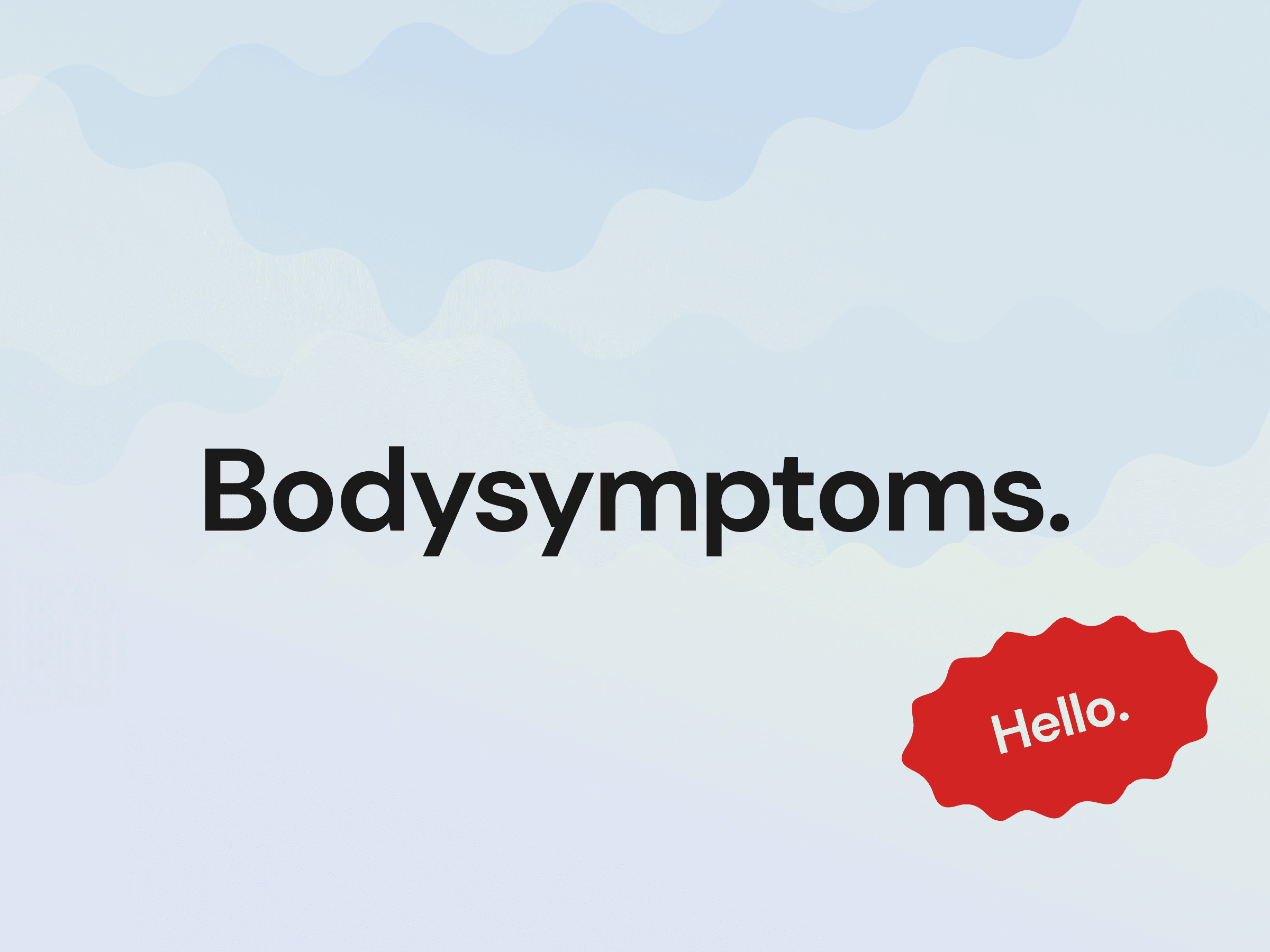
Bold black text reads "Bodysymptoms" on a soft blue wavy background. A red sticker in the bottom right says "Hello." in white letters.
Bar chart with four rounded bars—white tallest, then black, red, and blue shortest. Each bar labelled by colour. Light gradient background.
DM Sans font sample with A–Z, a–z, 0–9 on a light blue gradient; "DM Sans" in bold red at the top stands out clearly.
Three social media post mock-ups on blue. Left: Person with arms crossed, Meet Javi text. Centre: Bodysymptoms text. Right: Danish population suffers 10%.
Light blue Bodysymptoms webpage shows seven colourful human figure outlines with symptom markings and intro text to the left.
Two pale blue panels titled 'Bodysymptoms.' Bold headings, clear text, pastel human figure drawings; right panel shows more varied figures. ‘Scroll down’ on each.
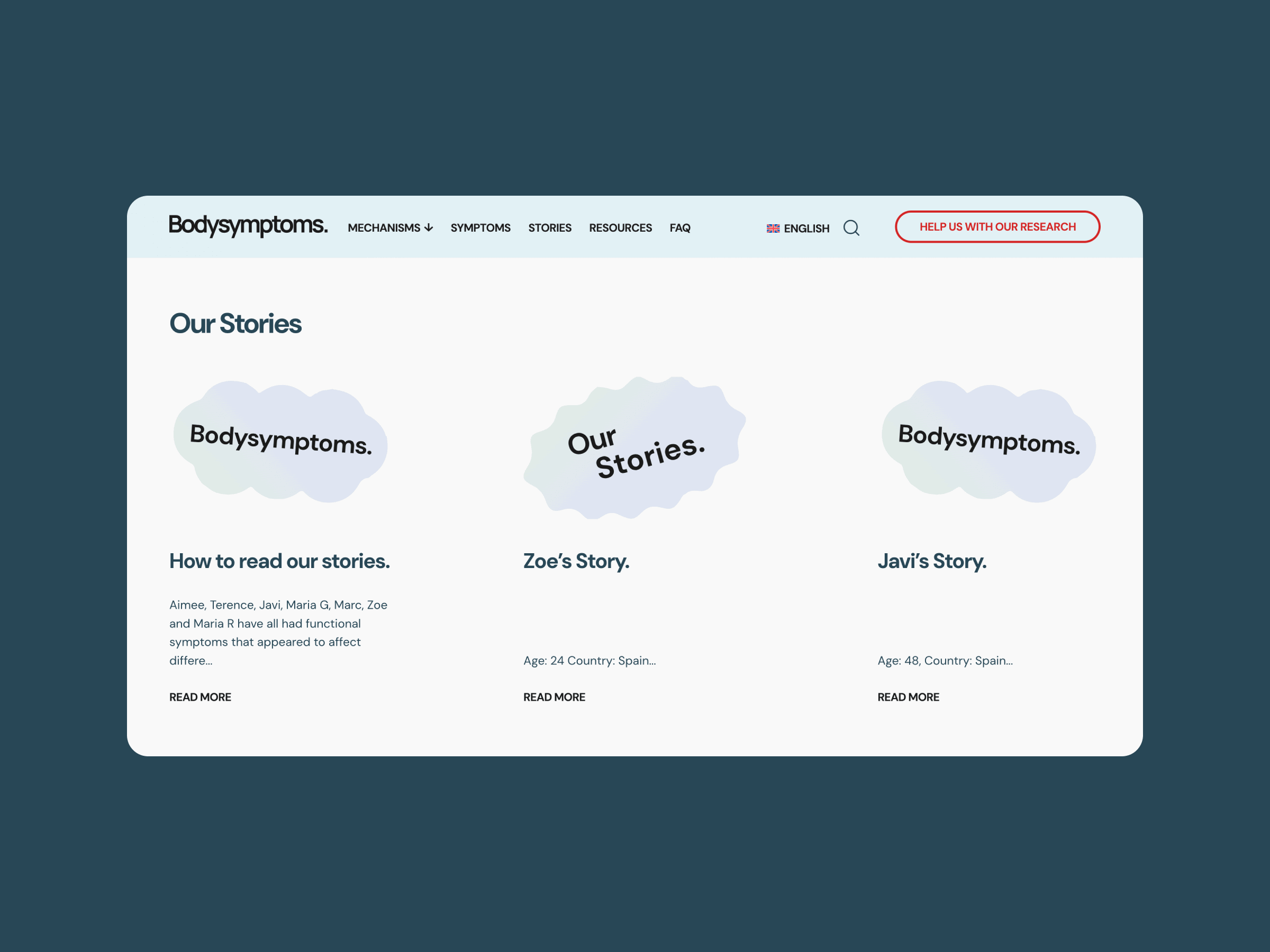
The 'Our Stories' webpage features Bodysymptoms, Zoe’s Story, and Javi’s Story with age, country, Read More links and top menu.
Two mobile screens show a site with Our Stories, Resources, body symptoms cloud, welcome text and a red speech bubble saying Hello.
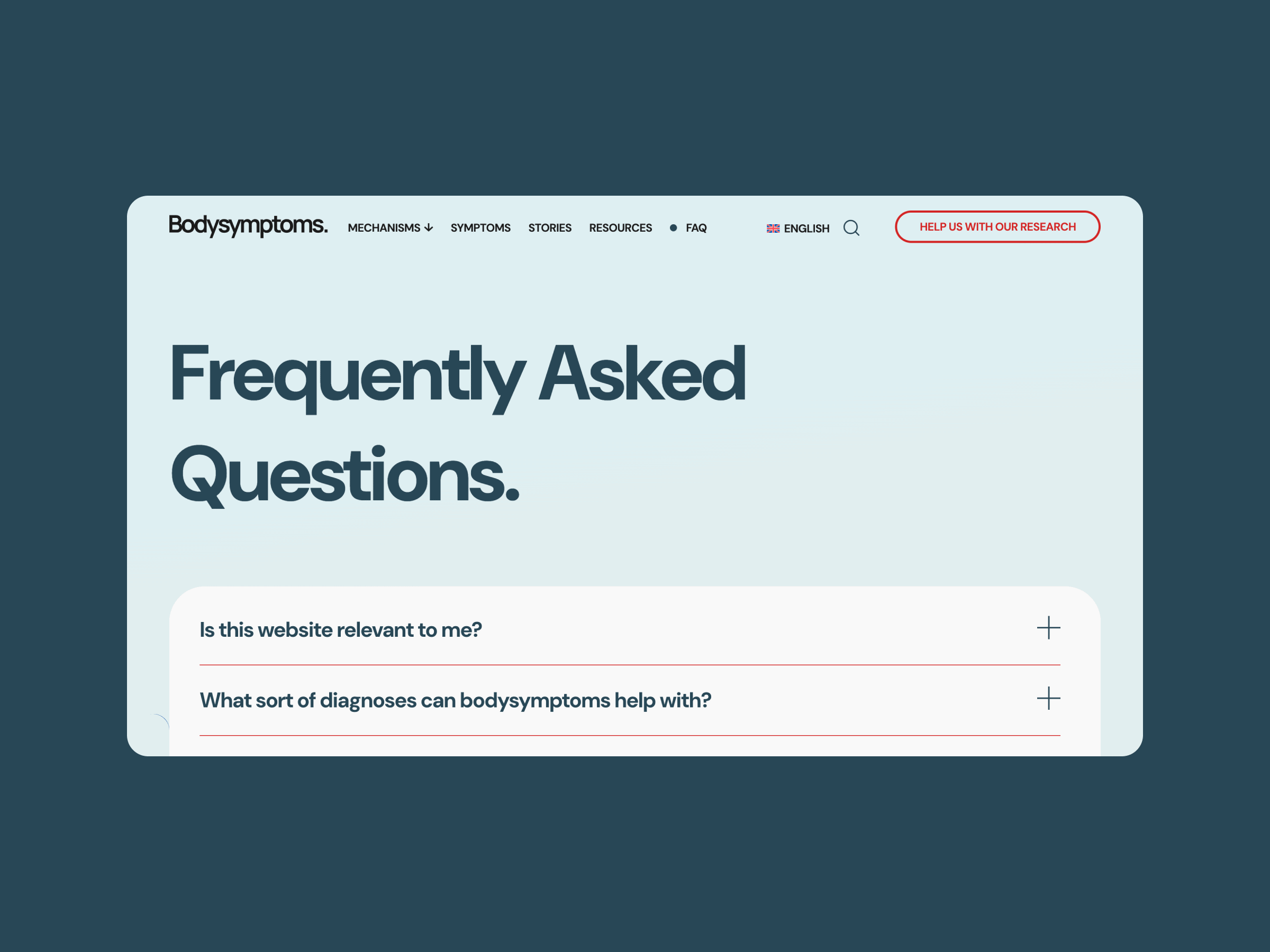
Bodysymptoms FAQ page showing bold 'Frequently Asked Questions' header with two questions: relevance and possible diagnoses.
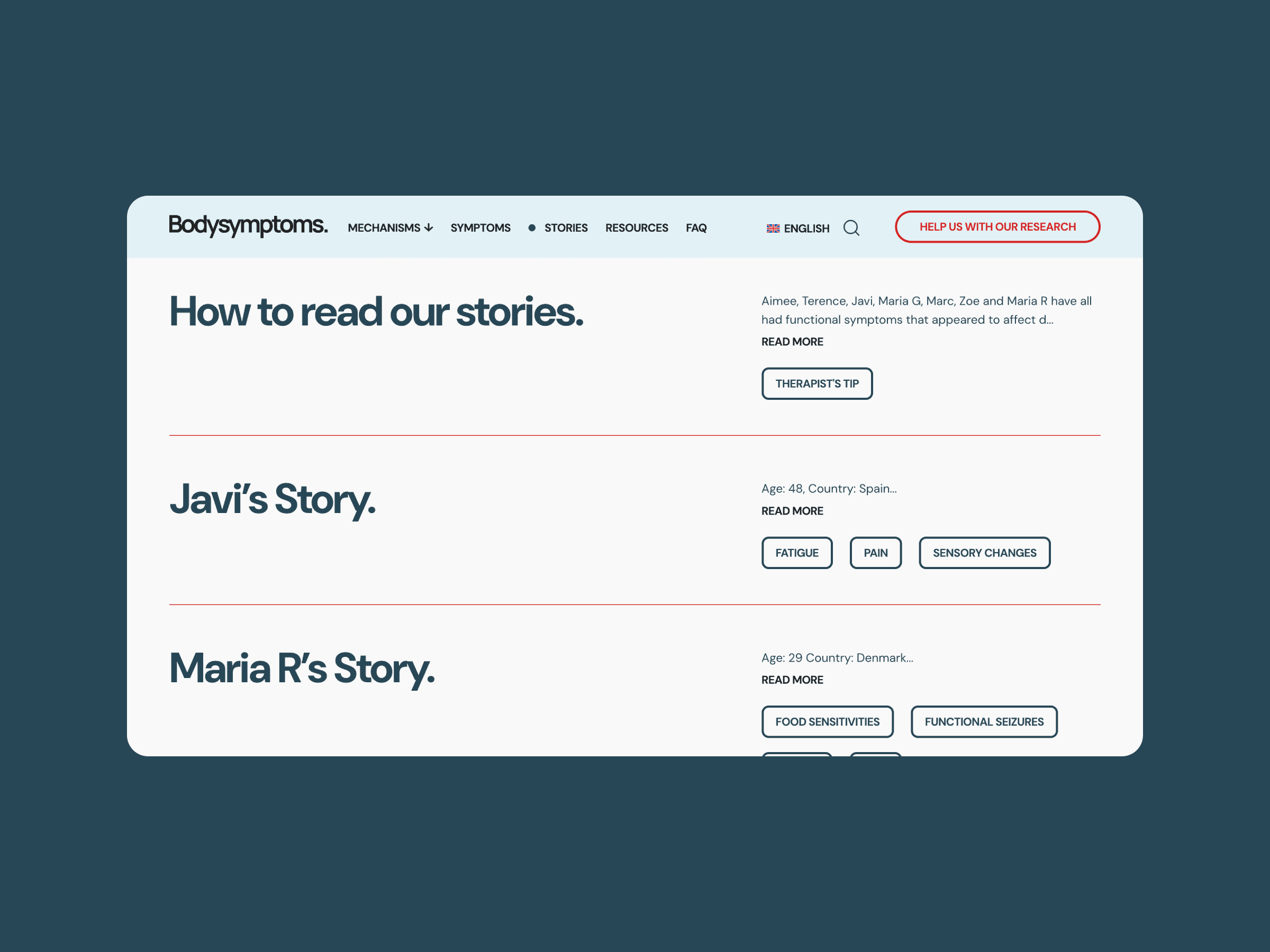
Webpage titled How to read our stories, with Javi’s and Maria R’s symptoms shown as clickable tags: fatigue, pain, sensory changes, food sensitivities, functional issues.
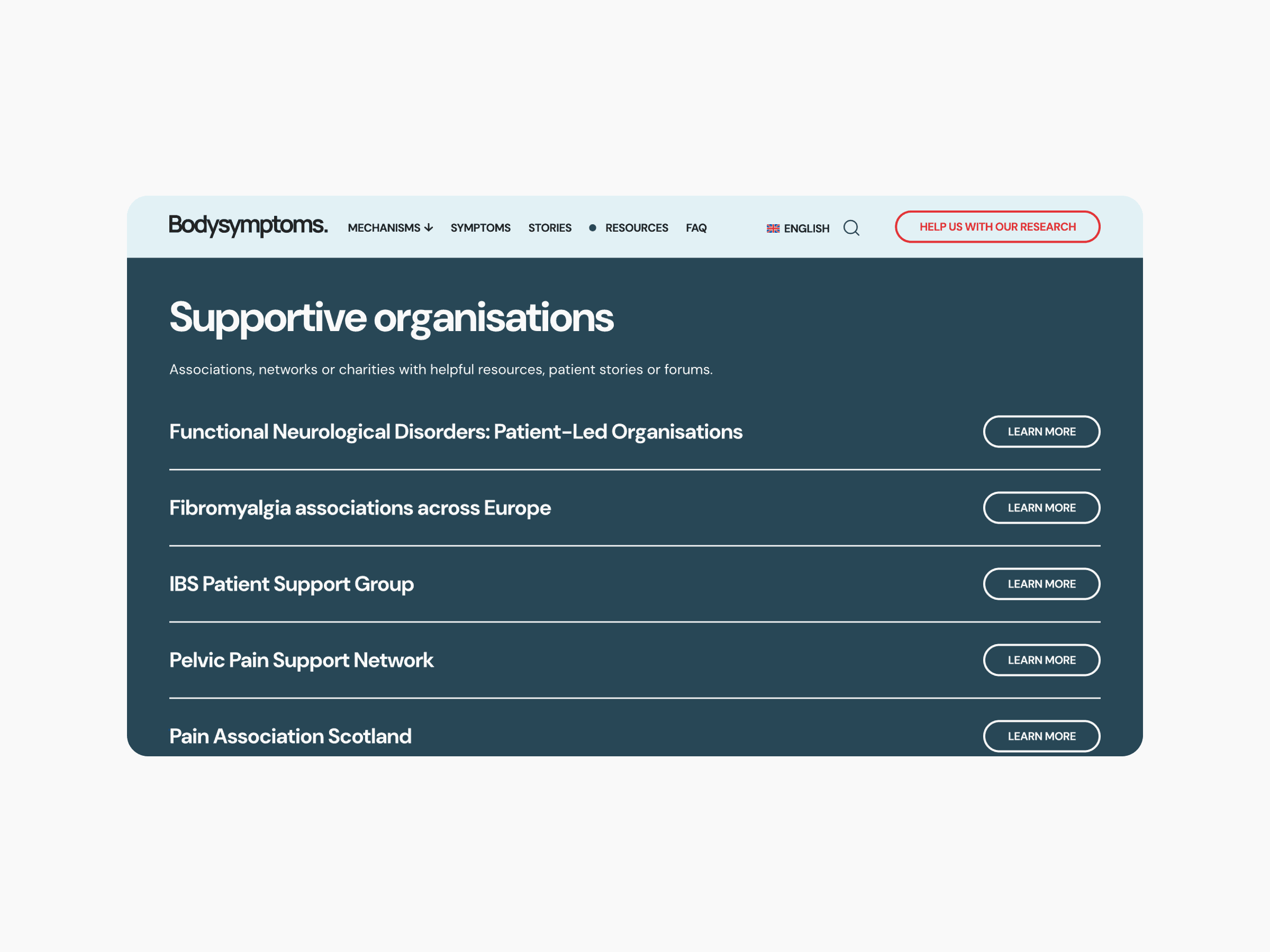
Website page showing support organisations for conditions like FND, Fibromyalgia, IBS, Pelvic Pain, with Learn more buttons.